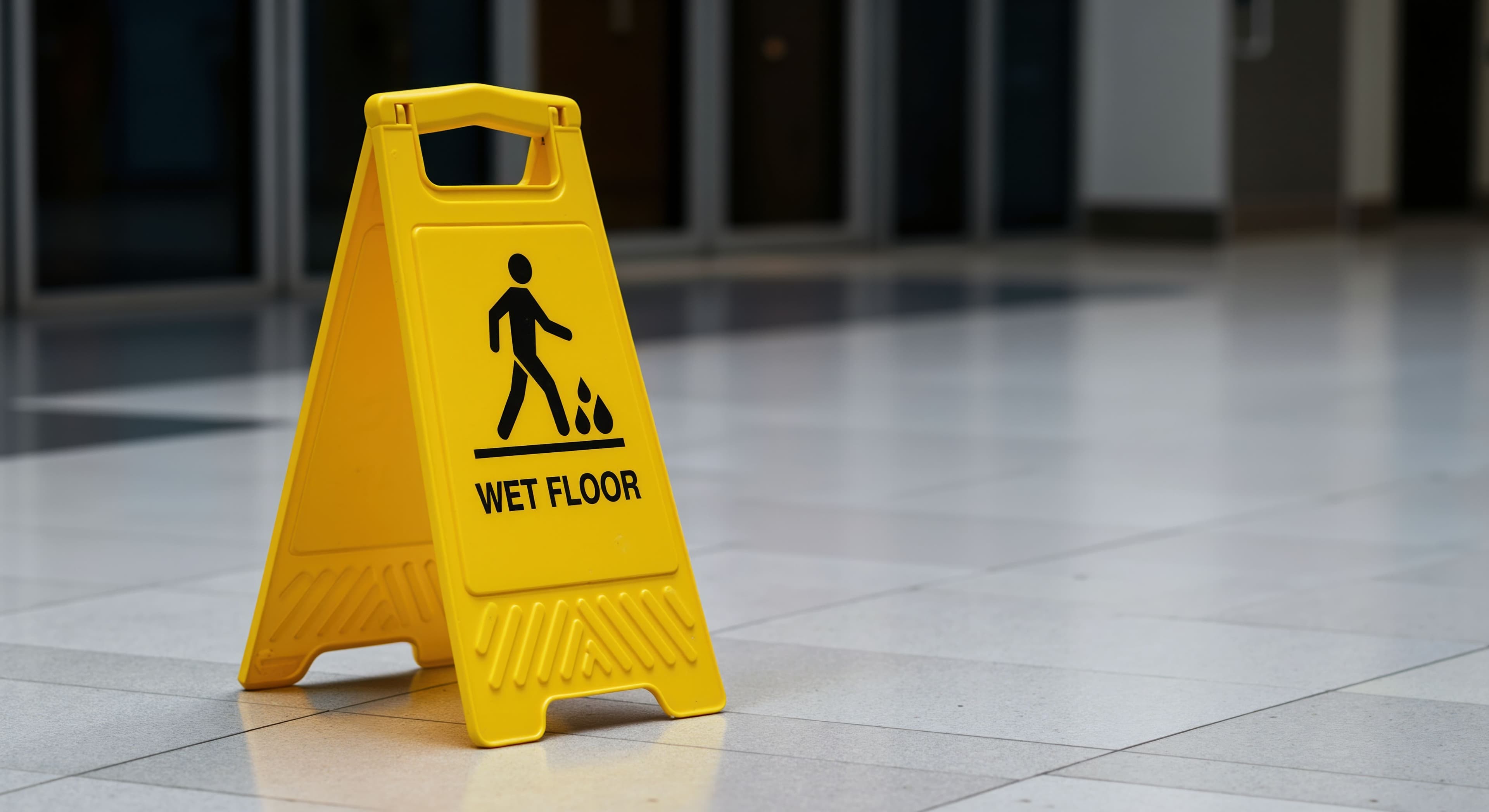


Slip and fall accidents happen in an instant, but the legal fight that follows can last years — and in Alabama, that fight is harder than in most states. Alabama's premises liability law contains several doctrines that property owners and their insurance companies use aggressively to defeat claims that would succeed in neighboring states. Understanding these doctrines before filing a claim is not optional. At Simmons Law, Chris Simmons represents slip and fall victims across Mobile County and Baldwin County, and every case begins with an honest assessment of how Alabama law applies to that specific accident.
Who Alabama Law Protects — and How Much
Alabama premises liability law divides injured visitors into three categories: invitees, licensees, and trespassers. Each category carries a different legal standard, and the category determines how hard the case will be to win.
An invitee is someone who enters a property with the owner's express or implied invitation for a purpose connected to the owner's business — a customer at Bel Air Mall, a patient at a USA Health campus clinic, a shopper at a Brookfield Plaza retailer. Property owners owe invitees the highest duty of care: they must use reasonable care to maintain the premises in a safe condition and must warn invitees of hidden dangers they know about or should have discovered through reasonable inspection. A wet floor at Mobile Regional Airport with no warning sign, a cracked parking lot at a shopping center on Airport Boulevard, or a broken step at a commercial building on Government Street — these create potential invitee claims where the property owner had a duty to act.
A licensee enters with the owner's permission but for the licensee's own purposes rather than the owner's business interests — a social guest at someone's home, for example. The duty owed to a licensee is lower: the owner must warn of known dangers but has no obligation to inspect for unknown ones. Trespassers are owed only the duty not to intentionally or wantonly harm them, with a narrow exception for child trespassers under the attractive nuisance doctrine.
Most commercial slip and fall cases in Mobile and Baldwin County involve invitees, where the duty of care is highest. But even invitee cases face serious obstacles under Alabama law that do not exist in other states.
The Open-and-Obvious Doctrine Kills Many Alabama Slip and Fall Claims
Alabama courts apply the open-and-obvious doctrine aggressively. Under this doctrine, a property owner owes no duty to warn an invitee about a dangerous condition that is open and obvious — meaning a reasonable person in the plaintiff's position would have seen and appreciated the hazard. If the danger was visible and apparent, the plaintiff is expected to have avoided it, and the property owner bears no liability for failing to warn.
Alabama courts have applied this doctrine to bar recovery in cases involving wet floors with visible moisture, uneven pavement in well-lit parking lots, and clearly marked construction zones. The doctrine is not absolute — there are exceptions when the property owner should have anticipated that an invitee might be distracted or might not notice the hazard despite its visibility — but the baseline rule is that obvious dangers do not create liability. In practice, this means that a significant portion of Alabama slip and fall claims that appear straightforward are actually defensible based on the open-and-obvious doctrine alone.
This is why evidence preservation matters immediately after a fall. Photographs taken at the scene showing the lighting conditions, the visibility of the hazard, and the specific circumstances of the fall are critical to whether the open-and-obvious defense can be defeated. A claim that is strong with contemporaneous photos may be weak without them.
The Notice Requirement — What the Plaintiff Must Prove
Even when the open-and-obvious doctrine does not apply, an Alabama slip and fall plaintiff must prove that the property owner knew or should have known about the dangerous condition. This is the notice requirement, and it is where many otherwise valid premises liability claims fail.
There are two types of notice. Actual notice means the property owner knew about the specific hazard — an employee saw the spill but did not clean it, or a manager received a prior complaint about the broken step. Constructive notice means the hazard had existed long enough that the owner should have discovered it through reasonable inspection — the spill had been there for an hour, visible from the checkout counter, and no employee walked by or checked.
Proving constructive notice requires evidence about how long the hazard existed. Security camera footage is essential — many commercial properties in Mobile retain footage for 30 to 90 days before it is overwritten. Incident reports from prior accidents at the same location, maintenance logs, and employee testimony about inspection routines all bear on constructive notice. This evidence must be demanded and preserved immediately after a fall, before the property owner's normal retention cycles delete it.
Surveillance Footage: 30-90 Day Window: Security camera footage from Bel Air Mall, Mobile Regional Airport, USA Health campuses, and commercial properties across Mobile is typically deleted on 30-90 day cycles. A preservation demand must go out within days of the fall.
Contributory Negligence: Alabama's All-or-Nothing Rule
Alabama is one of the last states in the country to apply pure contributory negligence under § 6-5-522 and common law. Under this rule, if the injured person bears any percentage of fault for the accident — even one percent — recovery is completely barred. There is no comparative fault apportionment, no reduction proportional to the plaintiff's share of responsibility. One percent fault means zero recovery.
In slip and fall cases, property owners and their insurance carriers routinely argue that the plaintiff was not watching where they were walking, was wearing inappropriate footwear, was distracted by a phone, or otherwise contributed to the accident. Any evidence that supports a contributory negligence argument — even weak evidence — is a serious threat to the entire claim. Alabama slip and fall plaintiffs must be prepared to address contributory negligence arguments head-on with evidence about the conditions at the time of the fall, what the plaintiff could reasonably see, and what a reasonable person in the same circumstances would have done.
The Two-Year Deadline
Alabama Code § 6-2-38 gives slip and fall plaintiffs two years from the date of injury to file a lawsuit. This is a hard deadline with very limited exceptions. Two years sounds like ample time, but the investigation required to build a strong premises liability case — incident reports, surveillance footage, inspection logs, prior complaint records, expert review of the hazard — takes time, and many of the key evidence sources disappear on timelines much shorter than two years.
The practical recommendation: contact a premises liability attorney within days of a serious fall, not weeks. The longer the delay, the more evidence is lost, and in Alabama's demanding legal environment, premises liability cases are won or lost on evidence.
Common Mobile and Baldwin County Premises Liability Locations
Slip and fall claims in Mobile County frequently arise at commercial retail locations along Airport Boulevard and Schillinger Road, at the Bel Air Mall complex on Airport Boulevard, at USA Health's medical campuses including University Hospital at 2451 Fillingim Street and the affiliated clinic network, at Mobile Regional Airport, and at the large grocery and big-box retail centers in west Mobile and Theodore. Parking lots — particularly those with drainage issues common in Mobile's heavy rainfall environment — are a recurring source of fall injuries.
In Baldwin County, the high-traffic retail and restaurant corridors in Fairhope, Daphne, and Foley generate premises liability claims, as do the beach access facilities and commercial properties along Highway 59 in Gulf Shores and Orange Beach, where heavy tourist foot traffic and seasonal staffing create conditions where hazards go unaddressed.
What Simmons Law Does in Premises Liability Cases
Chris Simmons handles slip and fall and premises liability cases from Simmons Law's office at 102 Saint Michael Street in Mobile, two blocks from the 13th Judicial Circuit courthouse at 205 Government Street. At Simmons Law, the premises liability investigation begins with preserving the evidence that the open-and-obvious doctrine and notice requirement will require: securing surveillance footage, photographing the hazard, obtaining incident reports, and demanding maintenance and inspection records before they are routinely destroyed.
Premises liability cases in Alabama require a different analysis than in most states. The open-and-obvious doctrine and contributory negligence rule create real obstacles that require experienced navigation. Injured people in Mobile County and Baldwin County can reach Simmons Law at (251) 306-8333 for a confidential consultation. There is no fee unless the case results in a recovery.